Quebec City In Winter 2026-2027: What'S Open And What To Book
January runs from -8°C by day to -18°C at night, and the city answers with a toboggan run, an ice hotel, Carnival, and streets that look better under snow than they do in July. Here is what is open, what it costs, and what to book.
 Written with Jean-Pierre Tremblay, Quebec City tour guide & heritage specialist
Straight answer
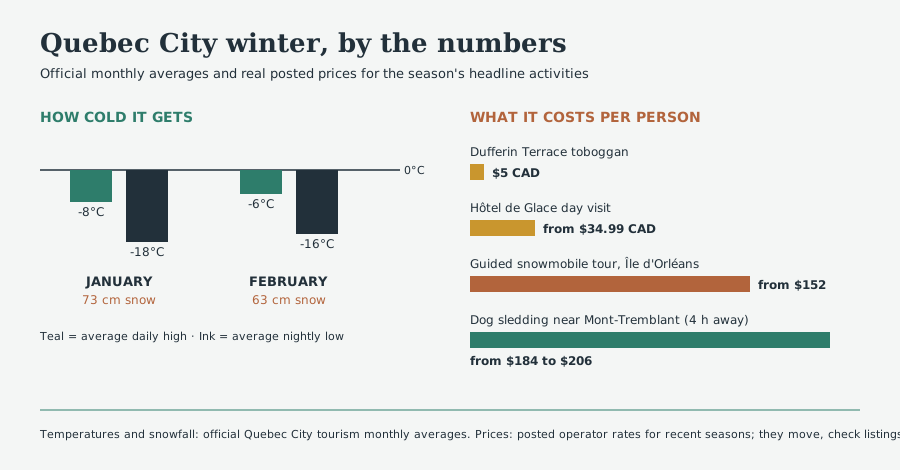
Quebec City in winter is cold in earnest: January averages a high of -8°C, a low of -18°C, and 73 cm of snow. Nearly everything stays open. The toboggan run costs $5, the ice hotel runs January 4 to March 13 (2027), Carnival runs February 5 to 14, and the best bookable winter tour is a guided snowmobile ride on Île d'Orléans.
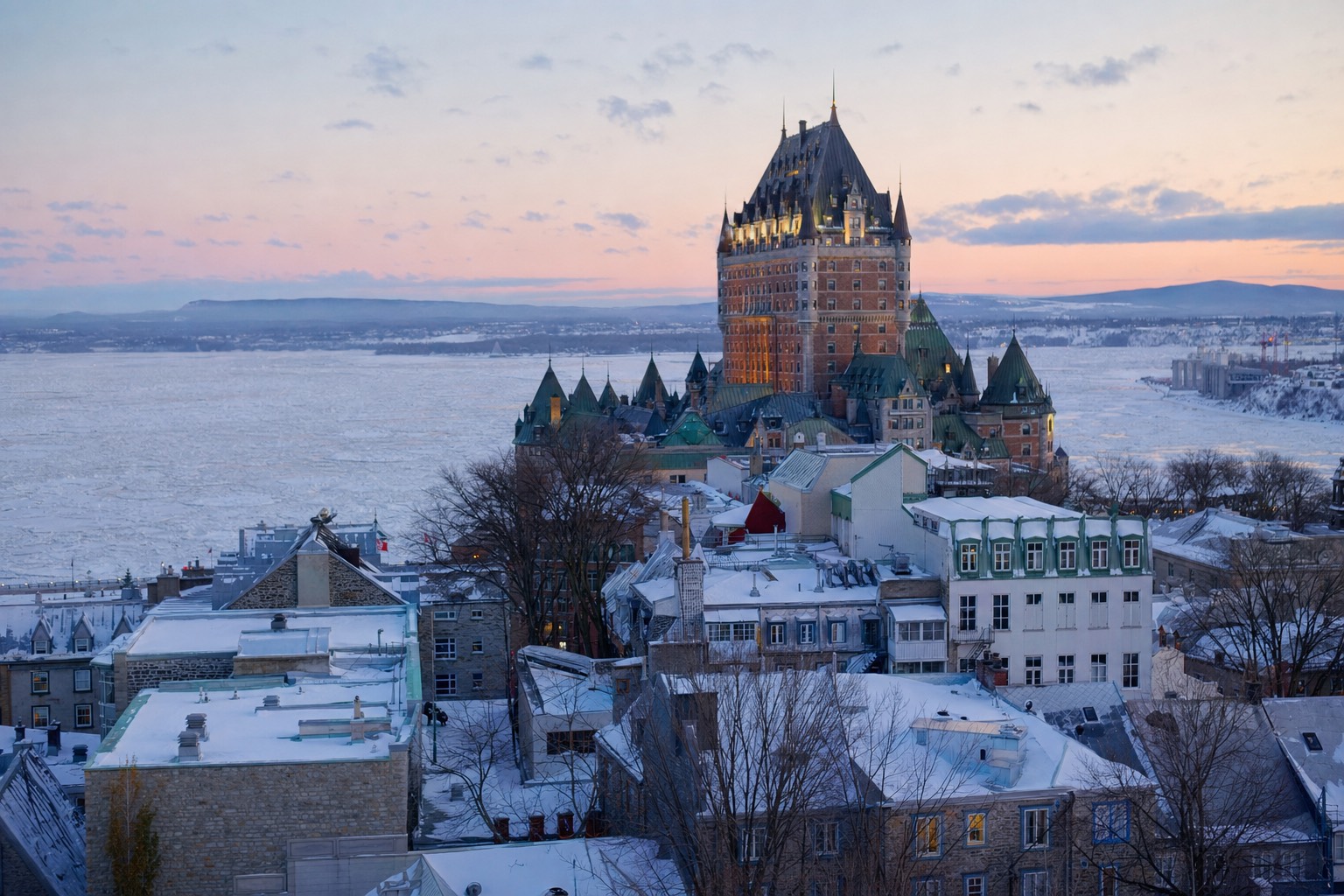
The sound I associate with February on Dufferin Terrace is a squeak. Snow does that below about minus fifteen: it stops crunching and starts squeaking under your boots, and the whole boardwalk sounds like a gymnasium. I guide here through every month of the year, and winter mornings are the ones I would keep if I had to give up the rest. Steam off the river ice, the Frontenac's copper roofs holding a line of snow, and three kids hauling a toboggan back up the ramp for another run.
That is the honest pitch. The equally honest warning is that this is real cold, the kind you plan clothing around. Both halves belong in the same guide.
TL;DR
- January: average high -8°C, low -18°C, 73 cm of snow. February: -6°C to -16°C, 63 cm.
- Almost everything in Old Quebec stays open all winter. The seasonal headliners run on windows: Hôtel de Glace January 4 to March 13 (2027 season), Carnival February 5 to 14, 2027.
- The Dufferin Terrace toboggan run costs $5 a ride. An ice hotel day visit starts at $34.99 CAD.
- One bookable winter option outside the city is the Île d'Orléans snowmobile tour (4.9, 232 reviews, from $152). Dog sledding sold alongside Quebec listings happens near Mont-Tremblant, about 370 km away. Plan accordingly.
How Cold Does Quebec City Really Get In Winter?
Cold in earnest. Official averages put January at a high of -8°C and a low of -18°C, with 73 cm of snow falling in that month alone. February eases only slightly: -6°C by day, -16°C at night, another 63 cm of snow. It is serious, dry, often sunny cold that the city is built around.
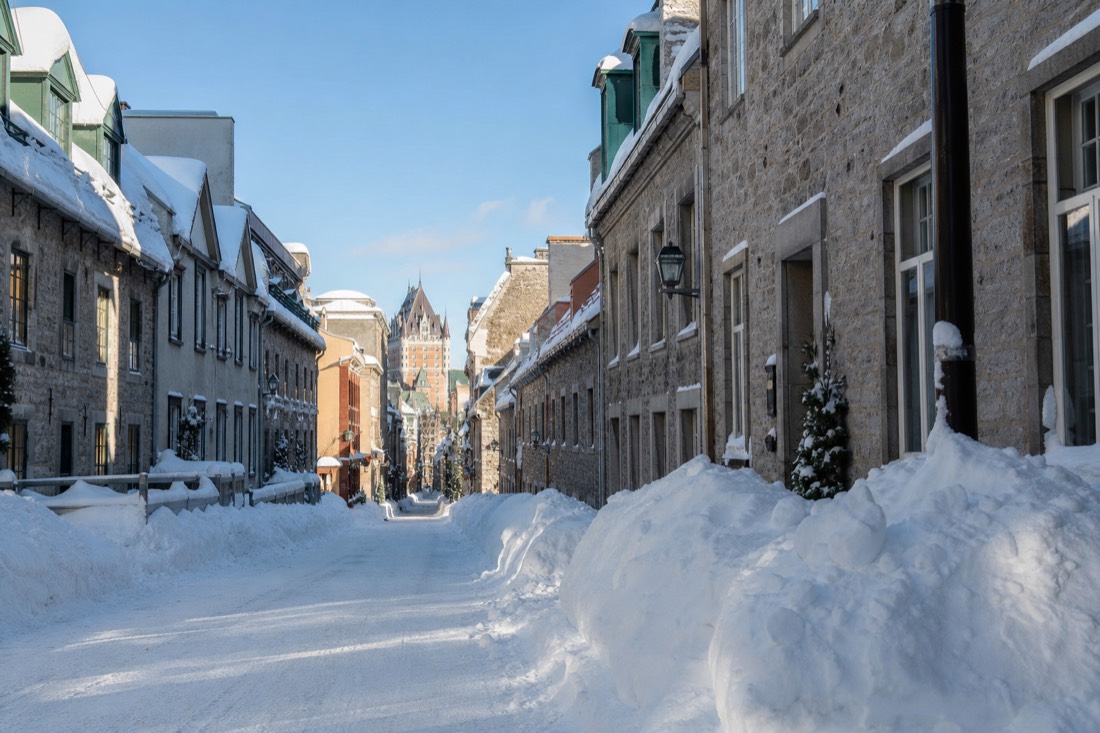
Numbers like -18°C read worse on a screen than they feel on the street, at least on the frequent windless days. This is dry continental cold, not damp coastal cold, and the difference matters. The official tourism office publishes the monthly climate averages I am quoting, and they match what my toes report from twenty-odd winters in this province. What the averages hide is variance. A February week can hand you -25°C mornings and then a soft -4°C afternoon that turns the Casse-Cou stairs into a luge track.
| Month | What the streets are like | Cold and snow | What's happening |
|---|---|---|---|
| November | First lasting snow, lights going up inside the walls | Freezing sets in, snow starts to hold | Quiet shoulder month, shortest lines of the year |
| December | Full storybook mode, decorated Petit Champlain | Real winter arrives | Christmas season in Old Quebec |
| January | Deep snowpack, squeaky boardwalks | High -8°C, low -18°C, 73 cm of snow | Hôtel de Glace opens January 4 (2027) |
| February | Peak winter, river ice, busiest winter crowds | High -6°C, low -16°C, 63 cm of snow | Carnival, February 5 to 14, 2027 |
| March | Melting by afternoon, refreezing by night | Winter loosens its grip | Ice hotel's final weeks, through March 13 |
What'S Actually Open In Quebec City In Winter?
Nearly everything that matters. Old Quebec does not hibernate: shops, restaurants, museums, and the funicular all work straight through the season. The winter-only headliners run on set windows, so the ice hotel (January 4 to March 13, 2027) and Carnival (February 5 to 14, 2027) need dates, not just intentions.
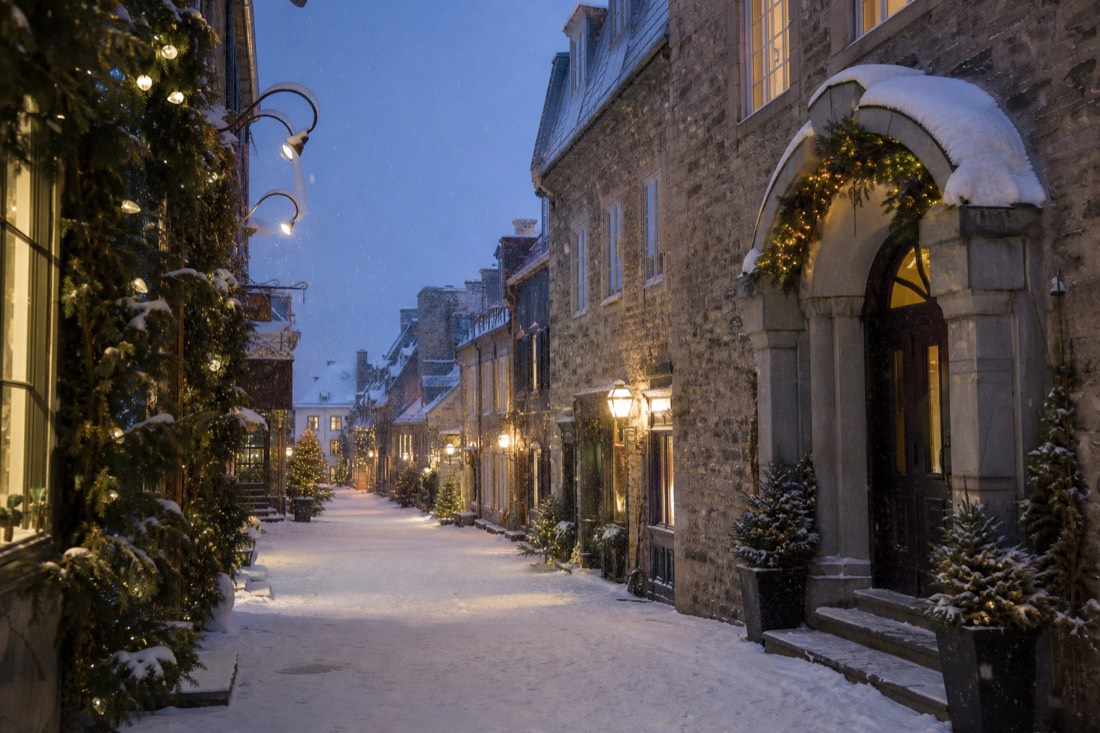
I keep meeting visitors who assumed the old town half-closes after New Year. It does not. My working weeks look much the same in January as in June, just with fewer people between me and the cannons at the Citadelle. What changes is the seasonal layer on top, and that layer runs on a calendar.
| Experience | Winter status | Window | Cost |
|---|---|---|---|
| Old Quebec streets, shops, museums | Open, at their quietest | All winter | Free to wander |
| Petit Champlain and the funicular | Open, prettiest under snow | All winter | Small fare for the funicular |
| Dufferin Terrace toboggan run | Running | Through the winter season | $5 CAD per person, on site |
| Hôtel de Glace (Valcartier) | Seasonal | January 4 to March 13, 2027 | Day visit from $34.99 CAD |
| Quebec Winter Carnival | Seasonal | February 5 to 14, 2027 | Pass prices on the official site |
| Snowmobile tours, Île d'Orléans | Running in season | Winter, snow permitting | From $152 |
| Dog sledding (Mont-Tremblant) | Running, but 370 km away | Winter | From $184 |
Two planning notes from that table. First, if your trip is built around a specific headliner, work backward from its window; a January 2 arrival misses the ice hotel by two days. Second, where you sleep matters more in winter than in summer, because you will duck indoors more often. My advice on that lives in the where to stay guide: inside the walls wins in winter.
What Are The Best Winter Activities In Quebec City?
The short list: ride the $5 toboggan run on Dufferin Terrace, day-trip to the Hôtel de Glace from $34.99, time your visit to Carnival if you can, and book the Île d'Orléans snowmobile tour if you want one organized outing. The spread runs from pocket change to $152.
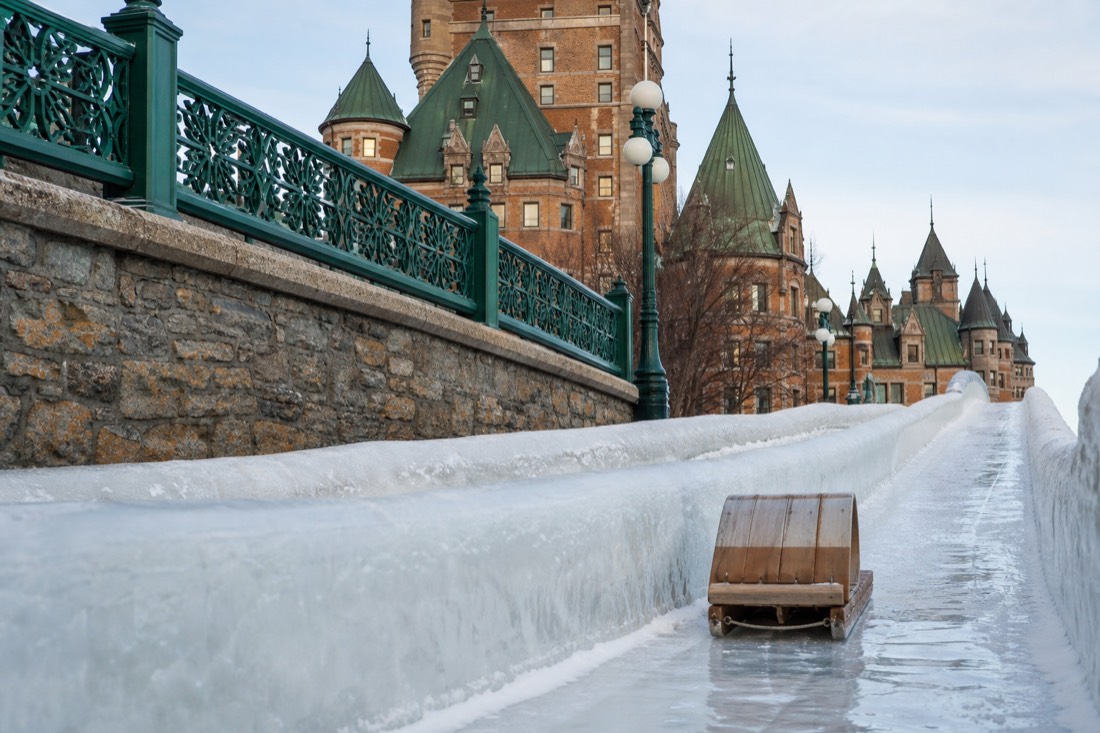
The toboggan run is the one I walk past almost daily in season, and it never stops drawing a line. Three icy chutes dropping along the terrace with the Château Frontenac looming over the top station, and the hotel's own activity page confirms the price: $5 CAD a person, paid on site. For five dollars it is the best value in the city, winter or summer.
The Hôtel de Glace is the opposite kind of outing, a planned half day just outside the city at Village Vacances Valcartier. The whole building is rebuilt from ice and snow every season, which is why it only exists from January 4 to March 13 in 2027. You do not need to sleep there; day visits start at $34.99 CAD and give you the chapel, the ice bar, and the suites.
Then there is Carnival, February 5 to 14 in 2027: Bonhomme, night parades, ice sculpture, the whole city leaning into the cold instead of enduring it. It deserves its own planning, and I wrote up the full Carnival breakdown separately. If your dates land earlier in the season, the Christmas stretch is the other peak worth aiming at.
| Winter activity | Cost per person | Time needed | Booking needed? |
|---|---|---|---|
| Toboggan run, Dufferin Terrace | $5 CAD | 20 minutes | No, pay on site |
| Hôtel de Glace day visit | From $34.99 CAD | Half a day with transport | Yes, dated ticket |
| Winter Carnival | Pass prices on the official site | 1 to 2 days | Dates, plus lodging early |
| Guided snowmobile tour, Île d'Orléans | From $152 | Half a day | Yes, timed departure |
| Dog sledding near Mont-Tremblant | From $184 | A full day-plus from Quebec City | Yes, and honest logistics |
Can You Go Snowmobiling Or Dog Sledding From Quebec City?
Snowmobiling, yes, and genuinely locally: a guided tour on Île d'Orléans, just across the bridge, rated 4.9 from 232 GetYourGuide reviews, from $152. Dog sledding is different. The tours sold alongside Quebec City listings run near Mont-Tremblant, roughly 370 km and about 4 hours away. Treat that as a Laurentians trip, not a city day out.
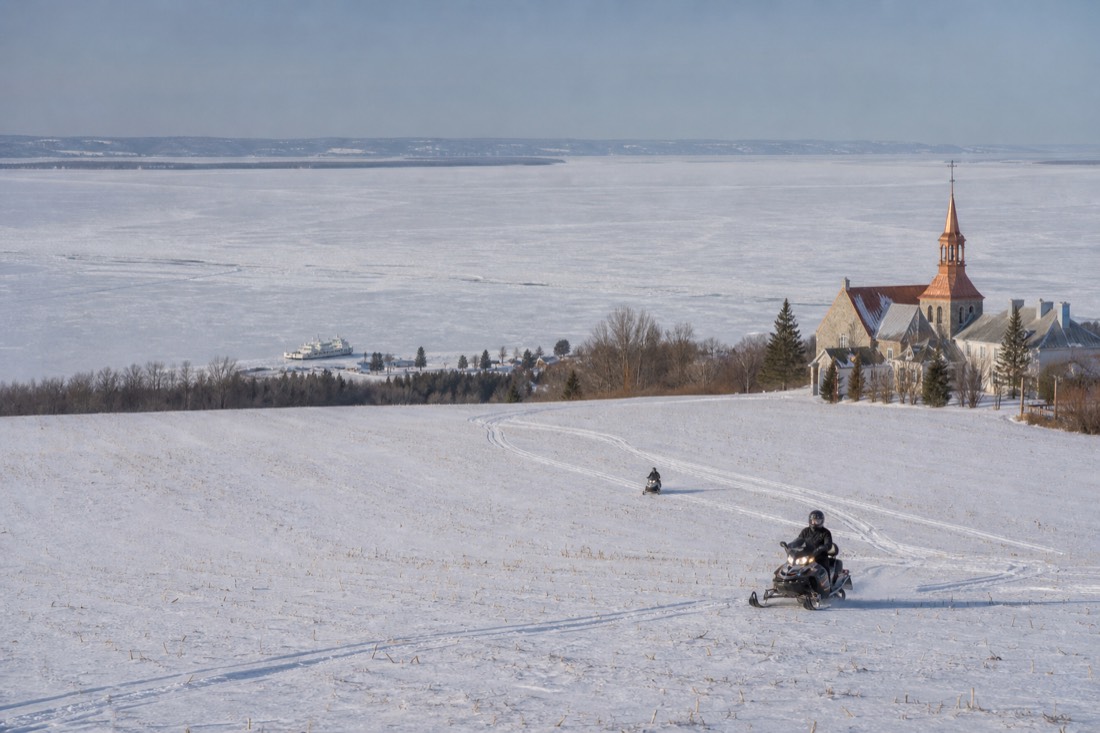
The snowmobile outing needs your own transport to Île d’Orléans and requires drivers aged 18 or over with a licence; passengers must be at least nine. Allow travel and preparation time in addition to the 90-minute ride. A guided Jacques-Cartier snowshoeing day is another option, with city transport, gear and lunch. Location Motoneige Québec runs it on Île d'Orléans, the farm island you can see from the terrace, and riders have pushed it to a 4.9 average across 232 reviews. From $152 it is the priciest thing on this page, but it is also the only way most visitors will ever drive a snowmobile across a frozen landscape with a guide handling the route. It anchors the winter tours lineup here, and you can check live availability & prices on GetYourGuide for the exact operating date and participation requirements.
Dog sledding needs the honest version, so here it is. Two well-reviewed options are sold to Quebec City visitors: a dogsledding valley adventure (4.9 from 69 reviews, from $184) and a guided run with hot chocolate afterward (4.9 from 43 reviews, from $206). Both are run by the Tremblant Activity Centre, and Mont-Tremblant sits about 370 km from Old Quebec, close to four hours of driving each way. Reviewers describe the sledding itself warmly. The distance is the catch. If your itinerary passes through the Laurentians or Montreal anyway, either tour slots in beautifully. As a day trip from a Quebec City hotel, it means eight hours in a car for two hours of dogs, and I will not dress that up as a city activity.
What Should You Wear In Quebec City In Winter?
Dress for the -18°C nights, not the -8°C afternoons: insulated waterproof boots with real tread, a knee-length insulated coat, thermal base layers, mittens over gloves, and a hat that covers your ears. Cotton is the enemy. If you can add ice cleats for the hills, do.
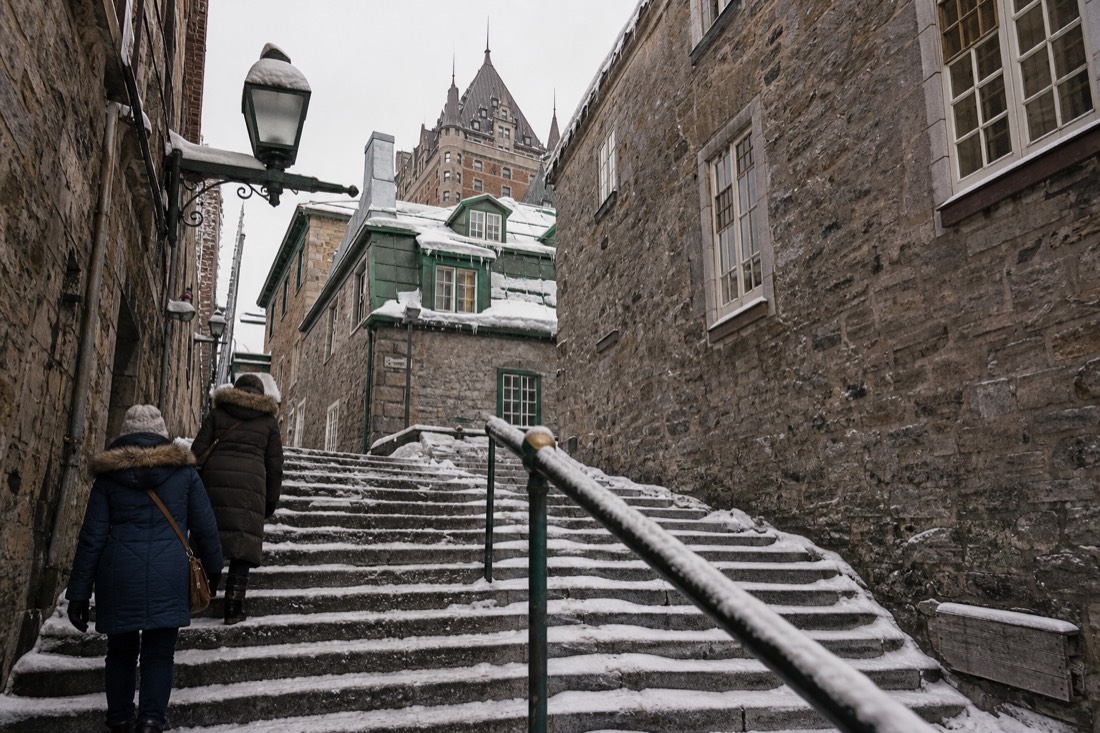
Every week of the season I watch someone attempt the Casse-Cou stairs in fashion sneakers, and gravity always wins. Old Quebec is vertical, and its slopes ice over. Boots with aggressive tread are the single purchase that changes a winter trip here, ahead of any coat upgrade. After that it is the boring layering gospel: a wicking base, an insulating middle, a windproof shell, and mittens, which keep fingers together and beat gloves at these temperatures.
The city itself is your backup heating system. My winter walking rhythm is forty minutes outside, then a deliberate warm-up stop: the funicular's glass car down to Petit Champlain, a museum, a café with a fireplace. Build eating into that rhythm and the cold becomes an asset; there is a reason the food tour side of the city does not slow down when the temperature drops, because nothing tastes better at -15°C than what Quebecers cook for -15°C.
What Does A Winter Day In Quebec City Cost?
You can fill a January day here for under twenty dollars. The toboggan run is $5 a ride, the streets cost nothing, and the funicular is $7 one way. The number jumps only when you leave town: from $34.99 CAD for an ice hotel day visit, from $152 for the guided snowmobile tour.
Winter is the cheap season in this city for one dull reason: the best thing about it is outdoors and free. Snow on the tin roofs, the river steaming, the Petit Champlain lanes lit and half empty at four in the afternoon. None of that has a ticket booth attached, and the two paid things I would put on a first-timer's list, the toboggan run and the funicular, come to twelve dollars together.
The spend that matters is the one outside the walls. An ice hotel day visit or a snowmobile morning is a planned half day with transport attached, so it needs a slot rather than a spare hour. Price them as the anchor of a day, not as an add-on, and the rest of the winter budget looks after itself.
| What | Cost as listed | Time it takes |
|---|---|---|
| Walking Old Quebec in the snow | Free | As long as your toes hold out |
| Toboggan run, Dufferin Terrace | $5 CAD per person, paid on site | 20 minutes |
| Funicular between the towns | $7 one way, 9 am to 9 pm | Two minutes and a warm-up |
| Citadelle of Québec, adult 2026 | $22 CAD, guided visits only | About an hour and a half |
| Hôtel de Glace day visit | From $34.99 CAD | Half a day with transport |
| Guided snowmobile tour, Île d'Orléans | From $152 | Half a day |
| Dogsledding near Mont-Tremblant | From $184 | A full day and then some |
| Winter Carnival pass | Prices on the official site | One to two days |
How Do You Reach The Winter Activities Without A Car?
The city ones need nothing but boots. The toboggan run and the old town are already under your feet, and Île d'Orléans sits across a single bridge. Valcartier and the ice hotel are a planned trip out of town. Mont-Tremblant, at roughly 370 km, is another region entirely.
Distance is the quiet variable in a Quebec City winter, and listings do not always make it obvious. Everything inside the walls is walkable in weather that would ground you elsewhere, because the streets are cleared, the sightlines are short and there is a café every hundred metres to defrost in. That is the case for basing yourself inside the fortifications in January.
Outside them, check the pickup arrangement before you check the price. Some operators run transport from the city and some expect you at the door, and that single detail decides whether an activity is a half day or a logistics project. The dog sledding sold to Quebec City visitors is the extreme case: reviewers rate the experience highly, but the operator is at Mont-Tremblant, roughly 370 km and close to four hours of driving each way, and no amount of enthusiasm shortens that road.
| Where | Distance from Old Quebec | How you get there | My honest read |
|---|---|---|---|
| Dufferin Terrace toboggan run | In the old town | On foot | No planning required at all |
| Petit Champlain and the funicular | In the old town | On foot, or $7 for the lift | The best free hour of a winter day |
| Île d'Orléans, snowmobile tour | Across the bridge from the city | Check the listing for pickup, otherwise drive or taxi | The one organized outing that is genuinely local |
| Village Vacances Valcartier, Hôtel de Glace | Just outside the city | Drive or taxi; confirm any shuttle with the operator before booking | Buy the dated ticket first, sort transport second |
| Mont-Tremblant, dog sledding | About 370 km, close to four hours each way | Drive; there is no realistic city day-trip version | Do it on a Laurentians or Montreal leg, not from a Quebec City hotel |
Which Winter Dates Are Traps In Quebec City?
Three of them. Arriving January 1 to 3 misses the ice hotel, which opens on the 4th. Arriving after March 13 misses it altogether. And landing in Carnival week, February 5 to 14, 2027, means paying peak lodging for a city you were probably picturing empty.
Winter here runs on windows, and the windows are published well in advance, which makes these mistakes entirely avoidable and therefore more annoying when they happen. I have had guests fly in on January 2 specifically for the ice hotel. Two days out. There is no version of that conversation I enjoy having on Dufferin Terrace.
The other trap is subtler and catches December visitors. The Christmas market closes on the 23rd, so anyone arriving for Christmas week itself finds lit streets and no kiosks, a distinction covered in the Christmas market guide. The compensations are real, the nativity scene runs on to January 4 and Petit Champlain stays decorated, but they are not a market.
| Dates | What is open | The trap |
|---|---|---|
| Late November | Old town, decorations up, Christmas market from November 19 | Snow is not guaranteed this early |
| December 24 to 31 | Everything except the Christmas market, closed since the 23rd | Lit streets, no kiosks; the nativity runs to January 4 |
| January 1 to 3, 2027 | City open, ice hotel not yet | It opens January 4, so you miss it by days |
| January 4 to early February | Deep winter, ice hotel open, thinnest crowds of the year | The coldest stretch: January averages -8°C by day and -18°C at night |
| February 5 to 14, 2027 | Carnival, in full noise | Peak crowds and peak lodging; book months ahead |
| After March 13 | City open, ice hotel closed for the season | Melting by afternoon, refreezing by night, the worst footing of the year |
Pick your window first and the rest of the trip arranges itself around it. That is the opposite of how I plan a summer visit here, and it is the single biggest difference between travelling to this city in July and travelling to it in January.
Is Winter A Good Time To Visit Quebec City?
Yes, if you want the storybook version of the city and will dress for it. Winter brings the thinnest crowds of the year outside Carnival week, the lowest-stress access to every landmark, and experiences that simply do not exist in July. It asks for real cold tolerance and a bit of scheduling in exchange.
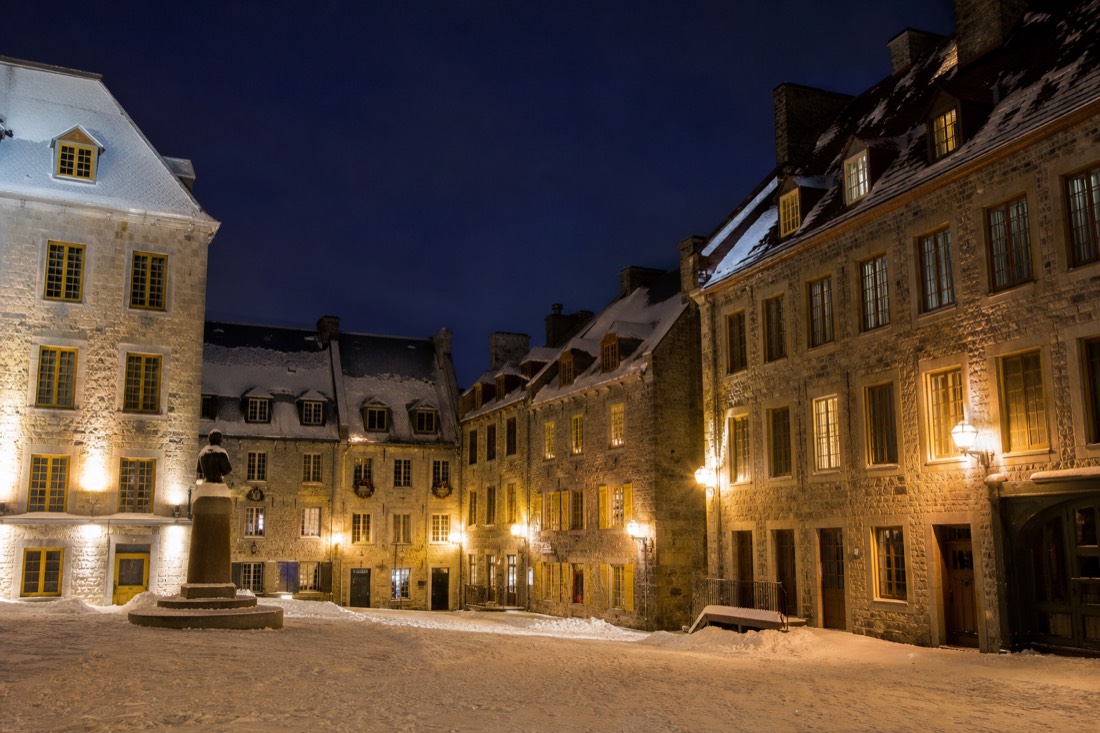
My bias is on the table: I think snow is this city's best light. The walls, the tin roofs, the narrow streets all read as more themselves in January than in August, and you share them with a fraction of the people. January is the quiet-and-cold sweet spot. February trades some quiet for Carnival's energy and slightly gentler temperatures. Early December buys you the decorations without the deepest freeze.
Whether winter beats the other seasons for your particular trip is a longer conversation, and I keep the full season-by-season comparison in the best time to visit guide. The short version: summer is easier, winter is more memorable. Pick which of those you are collecting, pack for the -18°C nights, and put one booked outing on the calendar so the cold has a job to do.
Your Next Step
Choose Your Quebec Experience
General recommendation, before you add preferences. Confirm dates and participation requirements with the operator.
Have your travel date in mind? Explore the snowy forest with a guide, snowshoe equipment, round-trip transport and lunch included. Check the departure before arranging the rest of your day.
6 hours overall, including the journey. This is an active winter excursion; check the conditions and participation requirements.
Departure schedule from Viator; final availability and price are confirmed on Viator.
Compare Options And Fit Your Plans
Explore the snowy forest with a guide, snowshoe equipment, round-trip transport and lunch included. 6 hours overall, including the journey. This is an active winter excursion; check the conditions and participation requirements.
Follow a guide across the island’s winter landscape with helmet and winter gear supplied. 90-minute ride, plus preparation and your own transport to 186 Côte Lafleur. Allow 4 hours from Quebec City. Drivers must be 18+ with a licence; passengers 9+. Two riders share a machine; physical restrictions apply.
Taste poutine, pea soup and maple treats across a guided Old Quebec food walk. 3 hours, English guide. Menus can change; dietary substitutions require advance confirmation.
Explore Old Quebec’s holiday atmosphere with a guide in period costume and a small hot chocolate. 2 hours on foot. Book for the festive season; the walk does not include a Christmas Market ticket because the market is free.
Affiliate links: we may earn a commission at no extra cost to you.