Visiting The Château Frontenac Without Booking A Room: A Guide'S Honest Walkthrough
Yes, you can walk into the Château Frontenac. A local guide explains the lobby reality, the five ways to visit Quebec City's most famous hotel, the best photo spots by light, and what is actually behind the most-photographed-hotel claim.
 By Jean-Pierre Tremblay, Quebec City tour guide & heritage specialist
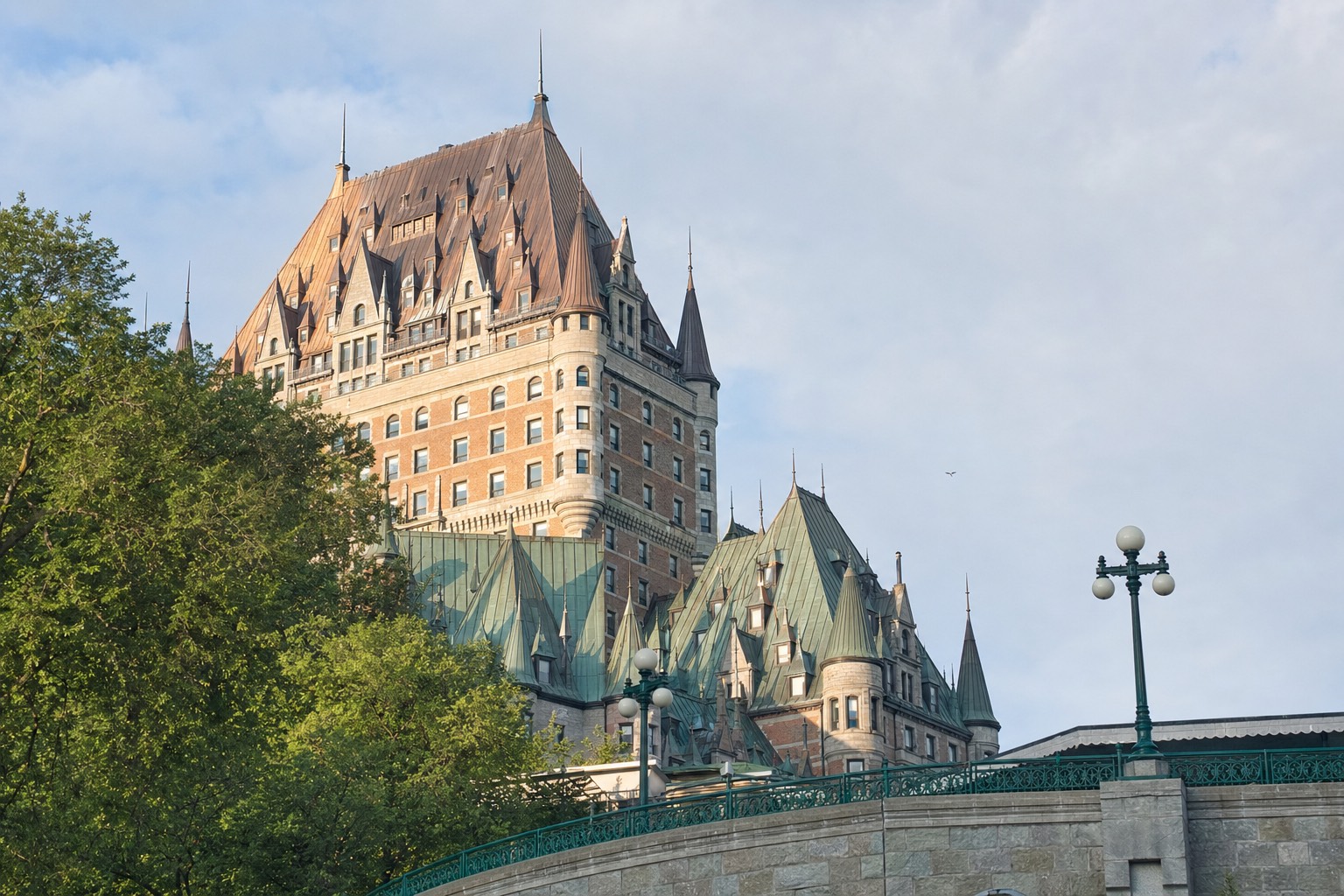
Every working morning I cross Dufferin Terrace before the crowds arrive, and every morning the same thing happens: someone is standing dead centre on the boardwalk, phone raised, blocking foot traffic, photographing the Château Frontenac. I have stopped minding. The green copper turrets against a clear sky are the reason half my guests booked their flights, and the first question they ask me under those walls is almost always the same one. Can we actually go in there, or is it just for hotel guests?
TL;DR: You can walk into the Château Frontenac without a reservation. The lobby and the public ground-floor spaces are open to respectful visitors, the terrace out front is free and public, and staying overnight is only one of five ways to experience the most famous hotel in Quebec City. Below: what makes it special, the walk-in reality, every visit option compared, the truth about the most-photographed claim, and where to stand for the shot.
What Is So Special About The Château Frontenac?
It is the building that makes Quebec City look like Quebec City. Opened in 1893 to a design by architect Bruce Price, the Frontenac crowns the cliff above the St. Lawrence with copper roofs and brick turrets, holds 610 rooms and suites today, and dominates nearly every postcard view of the old town.
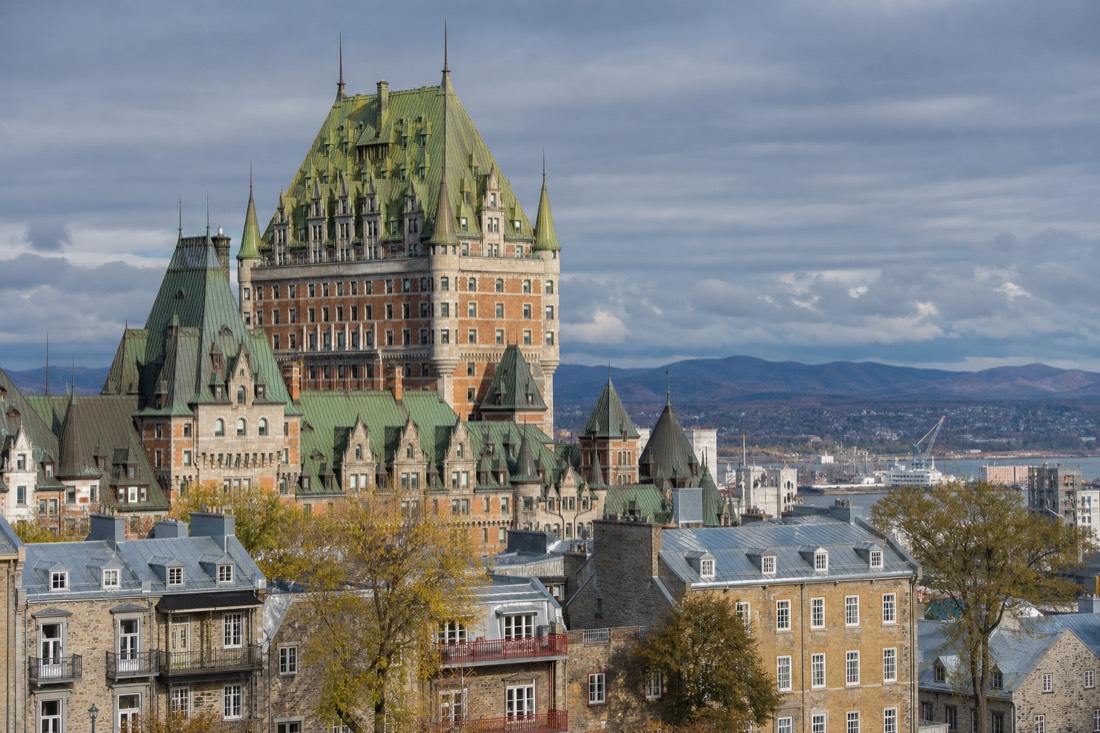
Plenty of cities have a famous hotel. Very few have one that functions as the city's logo. Stand anywhere with a sightline in Old Quebec, on the ferry, on the ramparts, halfway up the Casse-Cou stairs, and the Frontenac is the thing your eye lands on. It was built to do exactly that. Price put a castle on a cliff, and the city has organized its skyline around it ever since.
The scale surprises people once they get close. From the terrace it reads as a single romantic silhouette; walk the full perimeter and you realize it is a small vertical village, 610 rooms and suites stacked under those roofs. The suite names are their own history lesson. The hotel's roster includes a Churchill Suite, a Roosevelt Suite, a Charles de Gaulle Suite, an Elizabeth II Suite and a Céline Dion Suite, which tells you the register this place plays in. My guests from the States light up at Roosevelt; my Québécois neighbours are prouder of Céline.
And it sits inside a fortified old town, which multiplies the effect. The Frontenac is the centrepiece of the only walled city north of Mexico, so the castle-on-a-cliff image comes wrapped in four kilometres of real stone fortifications.
Can You Just Walk Into The Château Frontenac?
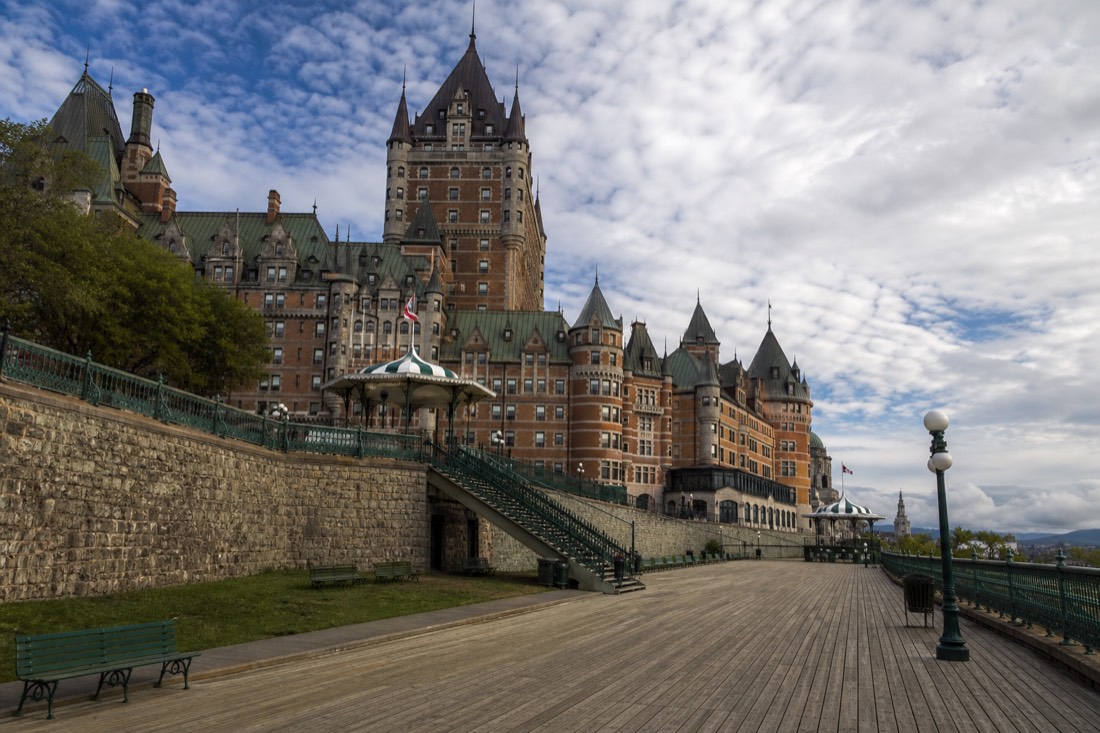
Yes. The Frontenac is a working hotel, not a gated monument, and its main doors are open to the public. You can enter from rue Saint-Louis or the terrace side, cross the lobby, look around the ground-floor halls and shops, and leave without spending a dollar. Dress like a human, behave like a guest, and nobody blinks.
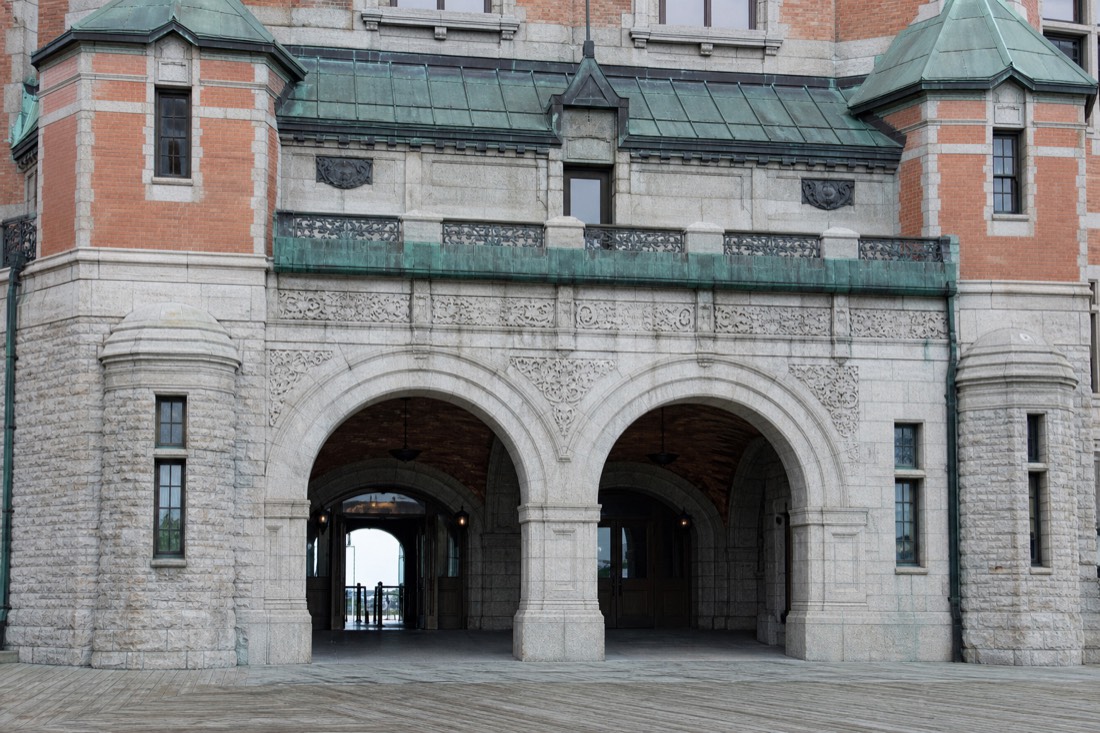
I send people through those doors several times a week, so let me describe the reality rather than the rumour. You walk in past the doormen, who greet everyone, and you are in a warm, wood-panelled world of chandeliers and thick carpet. Nobody asks for a room key. The ground floor holds the lobby, corridors lined with historical photographs, and a few boutiques, and wandering them slowly is a legitimate twenty-minute visit. Sitting down for a drink or a meal in one of the bars or restaurants stretches it to an hour, and buys you the right to linger.
Two honest caveats from someone who does this constantly. First, it is a functioning luxury hotel, so private events sometimes close a hall you were hoping to see, and staff will politely steer you out of guest-only floors. The elevators and room corridors are not part of the visit. Second, mid-afternoon in July the lobby can feel like a train station; go before 10 am or after 8 pm and you get the hush the building deserves.
People also ask me about guided interior tours and afternoon tea. Straight answer: offerings change, and while writing this I could not find a reliably published current schedule or price for either, so I refuse to quote numbers that might be stale by the time you arrive. Ask the concierge desk when you walk in, or check the hotel's own dining pages before you build your day around a seating.
What Are Your Options For Visiting Without Staying Overnight?
Five, on a rising scale of cost and commitment: walk the exterior and Dufferin Terrace for free, walk into the lobby for free, ask about an interior tour, book a table or tea for the price of the menu, or take the plunge and stay. Most visitors do the first two and leave completely satisfied.
Here is the full menu, with only the figures I can stand behind:
| Option | Cost | The reality check |
|---|---|---|
| Walk the exterior + Dufferin Terrace | Free | The terrace boardwalk is public, open year round, and delivers the best of the building plus the river view. This alone justifies the detour. |
| Walk into the lobby | Free | Main doors, ground floor, public halls and boutiques. Twenty unhurried minutes. Guest floors are off limits. |
| Guided interior tour | Not reliably published; ask the hotel | Availability and pricing change; confirm at the concierge desk or on the hotel site rather than trusting a blog's stale number, including mine. |
| Restaurant, bar or afternoon tea | Price of the menu; check current listings | A drink in the bar is the cheapest way to sit inside the landmark. Tea seatings and prices shift; verify directly with the hotel. |
| Stay the night | Seasonal rates across 610 rooms and suites | The bucket-list version. My honest comparison of sleeping here versus elsewhere in the old town is in the where-to-stay guide below. |
If the last row tempts you, weigh it against the rest of the old town first; my full breakdown of Upper Town, Petit Champlain and the budget alternatives is in the where to stay in Quebec City guide.
Fairmont Le Château Frontenac Check rates ›
And whichever row you choose, the building makes far more sense with the story attached. Nearly every departure on the [walking tours](/walking-tours/) page pauses at the Frontenac, and the two-hour classic route through both towns lets you **check live availability & prices on Viator** before you land. I watch those groups under the turrets daily; the guides earn their 4.9 rating at exactly this stop.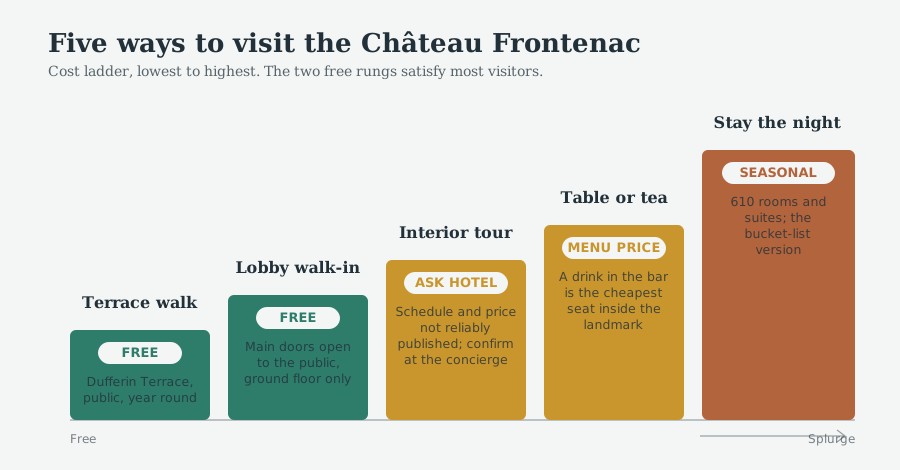
Is The Château Frontenac Really The Most Photographed Hotel In The World?
Nobody can prove it, and that is the honest answer. The claim appears everywhere, guidebooks, articles, the tourism industry itself, yet while researching this piece I could not trace it to any actual count or study. Treat it as a well-earned nickname rather than a statistic. What is beyond argument is that it is the most famous hotel in Quebec City.
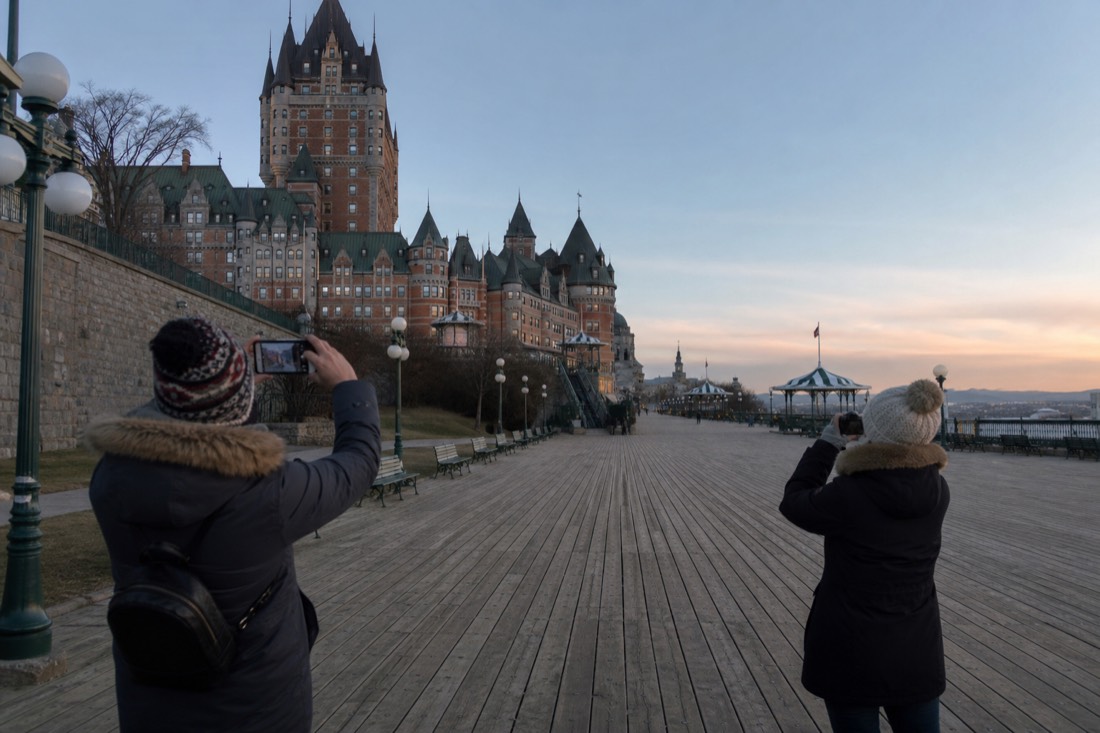
I repeat the line myself on tours, with the caveat attached, because the caveat is the interesting part. Somewhere along the way "most photographed hotel in the world" detached from whatever first inspired it and became self-fulfilling: people photograph the Frontenac partly because it is famous for being photographed. Watch the terrace for ten minutes at sunset and the claim stops feeling like marketing. Phones, tripods, wedding shoots, a drone permit argument if you are lucky. No hotel I have seen generates this volume of lenses per square metre.
The official tourism office's profile of the hotel sticks to what is verifiable, which I respect, and which this article tries to match. Famous, yes. Most famous in the city, without question. Most photographed on Earth: repeated everywhere, sourced nowhere, and honestly, standing under those turrets at golden hour, you stop caring.
Where Are The Best Photo Spots, And When Is The Light Right?
Work the building in a circle. Sunrise favours the river side from Lévis or the ferry, morning suits the Lower Town looking up, golden hour belongs to the Pierre-Dugua-de-Mons terrace, and blue hour on Dufferin Terrace, lamps lit, copper glowing, is the shot people frame at home.
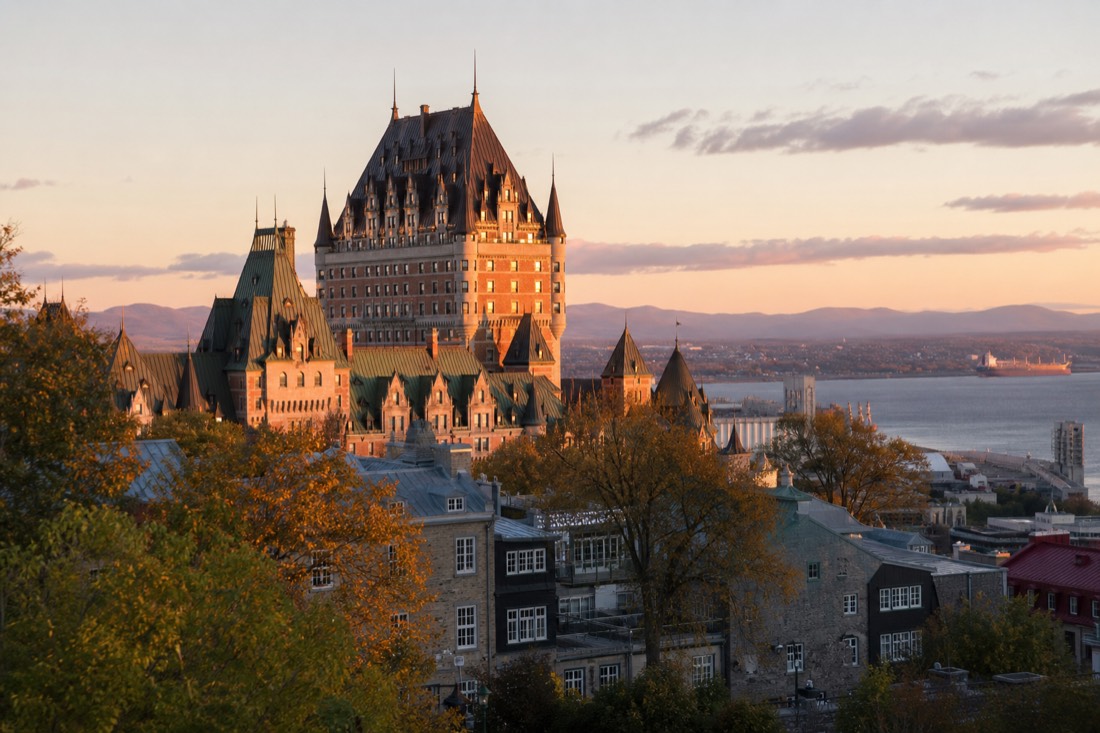
Four years of watching guests chase this shot, condensed into a table:
| Spot | Best light | The shot you get |
|---|---|---|
| Pierre-Dugua-de-Mons terrace (up the stairs past the Citadelle side) | Golden hour before sunset | The classic full-frame postcard: entire château, terrace and river in one clean frame. Where I take groups for the finale. |
| Dufferin Terrace boardwalk | Blue hour, lamps on | Turrets glowing over the boardwalk lamps. Winter with snow is the best version of this shot. |
| Rue du Petit-Champlain, looking up | Morning, before the street fills | The château looming over Lower Town rooftops and hanging shop signs. Tight, dramatic, very Quebec. |
| Place d'Armes and rue Saint-Louis | Midday | Street-level approach shots with calèches and the old town in frame. Forgiving light, works anytime. |
| The Lévis ferry deck | Sunrise, or after dark for skyline | The whole cliff-and-castle composition across the water. Cheapest cruise in the city and the only way to fit the full skyline in. |
The ferry angle is the underrated one; if the water view hooks you, the river options on the cruises page do the same skyline at slow speed with commentary. And photographers planning a full day of this should steal the walking order from my three-day itinerary, which sequences the viewpoints so the light follows you instead of fighting you.
Can You Visit The Château Frontenac If Stairs Are A Problem?
Mostly yes. Dufferin Terrace is a flat public boardwalk that runs straight to the hotel's front, the ground-floor halls are level once you are through the doors, and the funicular replaces the Casse-Cou stairs from Lower Town at $7 a ride. Only the Pierre-Dugua-de-Mons viewpoint demands real steps.
| Route or space | Steps involved | What to know |
|---|---|---|
| Dufferin Terrace boardwalk | None | Public, open year round, and the single best approach to the building |
| Place d'Armes and rue Saint-Louis | Street level | The other flat approach, and where the calèches wait |
| Lobby and ground-floor halls | Level once inside | Thick carpet, wide corridors; guest floors are not part of the visit |
| Casse-Cou stairs | The steep option | Skip them entirely if stairs are the problem |
| Funicular from Lower Town | Replaces the stairs | $7 a ride, and it does not take strollers onboard |
| Pierre-Dugua-de-Mons terrace | Up the stairs past the Citadelle side | The classic full-frame photo costs you the climb |
| Lévis ferry deck | Boarding ramps and vessel access | Confirm with the ferry operator rather than with me |
I am describing what I see every working morning, not quoting an accessibility audit, so treat this as a guide's read of the ground rather than an official statement. The doormen answer this question all day and will point you at the nearest level entrance if the one you reached is not it.
Winter changes the calculus more than any of the above. The boardwalk is cleared but it is still a wooden deck in a Quebec February, and the terrace's charm and its footing move in opposite directions once the snow packs down. If mobility is a live concern, the flat midday approach from Place d'Armes is a steadier route in than the boardwalk from the river end.
The honest summary is that the two free ways in, the terrace and the lobby, are also the two easiest ways in. The version of this visit that requires climbing is the photography version, and you can trade the Pierre-Dugua-de-Mons frame for the ferry deck without losing much.
What Does An Hour At The Château Frontenac Cost?
Nothing, if you want it to. The terrace is public, the lobby is free to walk, and the only unavoidable spend is the funicular at $7 if you are coming up from Lower Town. A drink in one of the bars is the cheapest way to sit down inside the landmark.
| What you do | What it costs | What you get for it |
|---|---|---|
| Terrace and exterior circuit | Free | The building, the river, and every angle people photograph |
| Lobby and ground-floor halls | Free | Twenty unhurried minutes of chandeliers, wood and historical photographs |
| Funicular up from Lower Town | $7 one way | The climb removed, and a glass-car view on the way |
| A drink in one of the bars | Price of the menu | A seat, and the right to linger without moving |
| Restaurant table or afternoon tea | Price of the menu; confirm with the hotel | Availability and pricing shift, so ask before you plan a day around it |
| Guided interior tour | Not reliably published; ask at the concierge desk | Confirm on the day rather than trusting any blog's stale figure |
| A two-hour walking tour that stops here | From about $41 | The building explained, plus the rest of both towns |
| A night in one of the 610 rooms | Seasonal rates | The bucket-list version, and the only one that needs booking |
Add it up honestly and the median visitor spends seven dollars. That is the number I give people when they ask whether the Frontenac is worth building an afternoon around: the answer is that it costs a funicular ride, so the only thing at stake is your time.
The paid rows are worth it for one reason each, not for prestige. A drink buys stillness in a room designed for it. A guided walk buys the reason the building looks the way it does, which is the difference between photographing a hotel and understanding why a railway company put a castle on a cliff. A room buys waking up inside the postcard, and if that is what you came for, no cheaper substitute exists.
What I would not spend money on is anything sold as Frontenac access. There is no ticket to buy at the door. Anyone charging you for entry to the lobby is selling something the hotel gives away.
How Does A Visit To The Frontenac Change With The Season?
Substantially, and mostly in your favour outside July. Winter puts snow on the terrace and gives the blue-hour shot its best version. Summer fills the lobby by mid-afternoon and the boardwalk at sunset. The shoulder weeks hand you the same building with far fewer people in the frame.
| Season | What changes at the building | My call |
|---|---|---|
| Deep winter | Snow on the boardwalk, lamps against white, the toboggan run running on the terrace | The best photographs of the year, and the shortest queues indoors |
| February, Carnival weeks | The upper town fills with festival crowds for ten days | Go early morning; the lobby is a warm-up stop, not a quiet one |
| Spring shoulder | Thinner crowds, unpredictable light, everything open | The easiest time to walk in and actually look around |
| Summer | Lobby like a train station mid-afternoon, terrace packed at sunset | Before 10 am or after 8 pm, and no compromise on that |
| Autumn shoulder | Crowds fall away, light gets long and low | My own favourite window for the exterior circuit |
Seasonality here is about people, not access. The terrace is public year round and the doors do not seasonally close, so what actually moves is how many phones are between you and the turrets. That number swings by an order of magnitude between a wet Tuesday in April and a clear Saturday in July.
One practical winter note. The blue-hour window that produces the shot everyone frames arrives absurdly early in December and January, sometimes before you have finished lunch mentally. Check the sunset time on the day rather than assuming an evening slot, or you will be setting up at seven for something that happened at half past four.
For the wider seasonal picture, including which months I would actually book, the month-by-month breakdown lives in the best time to visit Quebec City guide.
When Did The Château Frontenac Open, And Who Built It?
The doors opened on 18 December 1893, to a design by American architect Bruce Price. What began as a grand railway-era hotel above the St. Lawrence has grown into today's 610-room landmark whose suite names, Churchill, Roosevelt, de Gaulle, Elizabeth II, Céline Dion, double as its guest history.
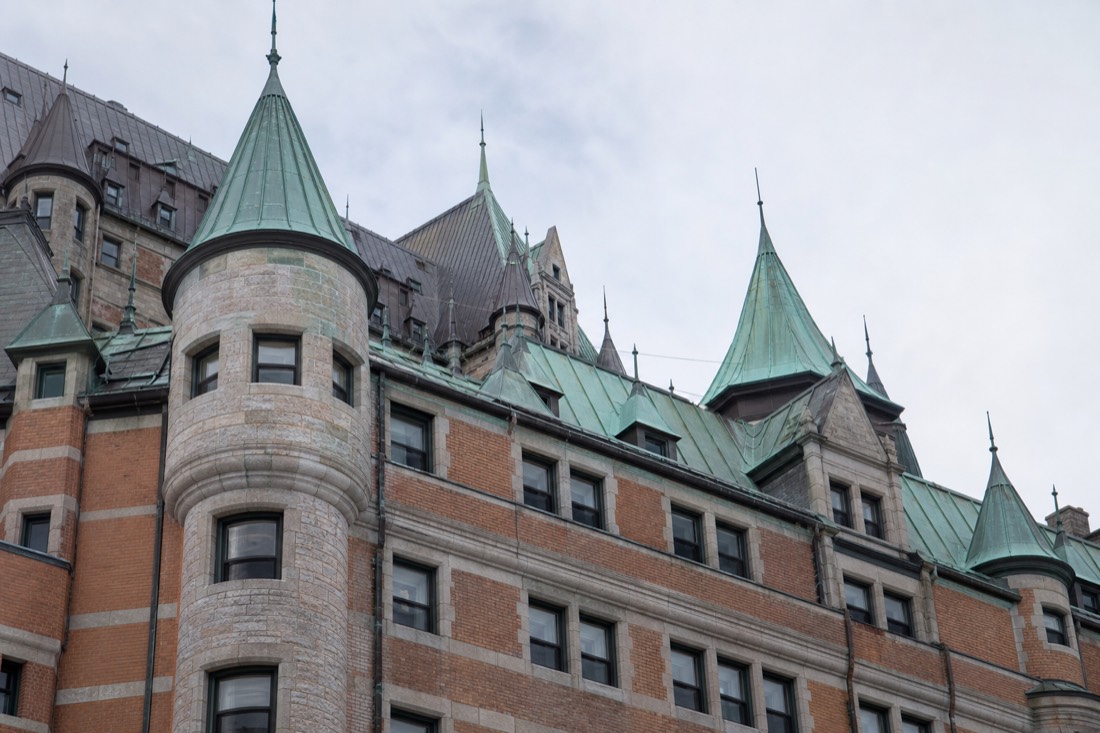
The verified record, stripped of legend:
| The Frontenac record | Verified detail |
|---|---|
| 18 December 1893 | Opening day. The hotel has now been operating across three different centuries. |
| The architect | Bruce Price, whose castle-on-a-cliff design became the image of the city. |
| Today | 610 rooms and suites in operation under the copper roofs. |
| The suite roster | Churchill, Roosevelt, Charles de Gaulle, Elizabeth II and Céline Dion all have named suites, the hotel's own tribute to its register. |
One thirty-second history stop and one lobby wander later, you will understand why I structure whole tours around this building. It is the anchor. Everything else in the old town, the walls, the stairs, the squares, arranges itself around the castle, and once you have your photo, the rest of the city is waiting; start with the full list of things to do in Quebec City and give the Frontenac the first hour, not the whole day.
Your Next Step
Choose Your Quebec Experience
General recommendation, before you add preferences. Confirm dates and participation requirements with the operator.
Have your travel date in mind? Connect Place Royale, Petit Champlain and the upper town with a licensed guide and an included funicular ride. Check the departure before arranging the rest of your day.
2 hours; meet at 112 Rue Saint-Paul and finish near City Hall. Hotel pickup is excluded.
Departure schedule from Viator; final availability and price are confirmed on Viator.
Compare Options And Fit Your Plans
Connect Place Royale, Petit Champlain and the upper town with a licensed guide and an included funicular ride. 2 hours; meet at 112 Rue Saint-Paul and finish near City Hall. Hotel pickup is excluded.
See the Château Frontenac and riverside landmarks from the St. Lawrence with bilingual commentary. 90-minute sightseeing cruise from Quebec City. Food, drinks and parking are extra; this is not whale watching.
Combine guided Lower Town stories with a round-trip ferry crossing and views from Lévis. 2 hours in English or French; meet at the Wolfe-Montcalm Monument, 7 Rue des Carrières. Ferry fare is included; this is a walking outing with a river crossing.
Affiliate links: we may earn a commission at no extra cost to you.