Montreal Vs Quebec City: Which Deserves More Of Your Trip?
One is a metro area of 4.6 million with a food scene that swallows whole evenings. The other is a walled town of stone streets you can cross on foot in twenty minutes. Here is how to divide your days between them, and when you should not divide at all.
 Written with Jean-Pierre Tremblay, Quebec City tour guide & heritage specialist
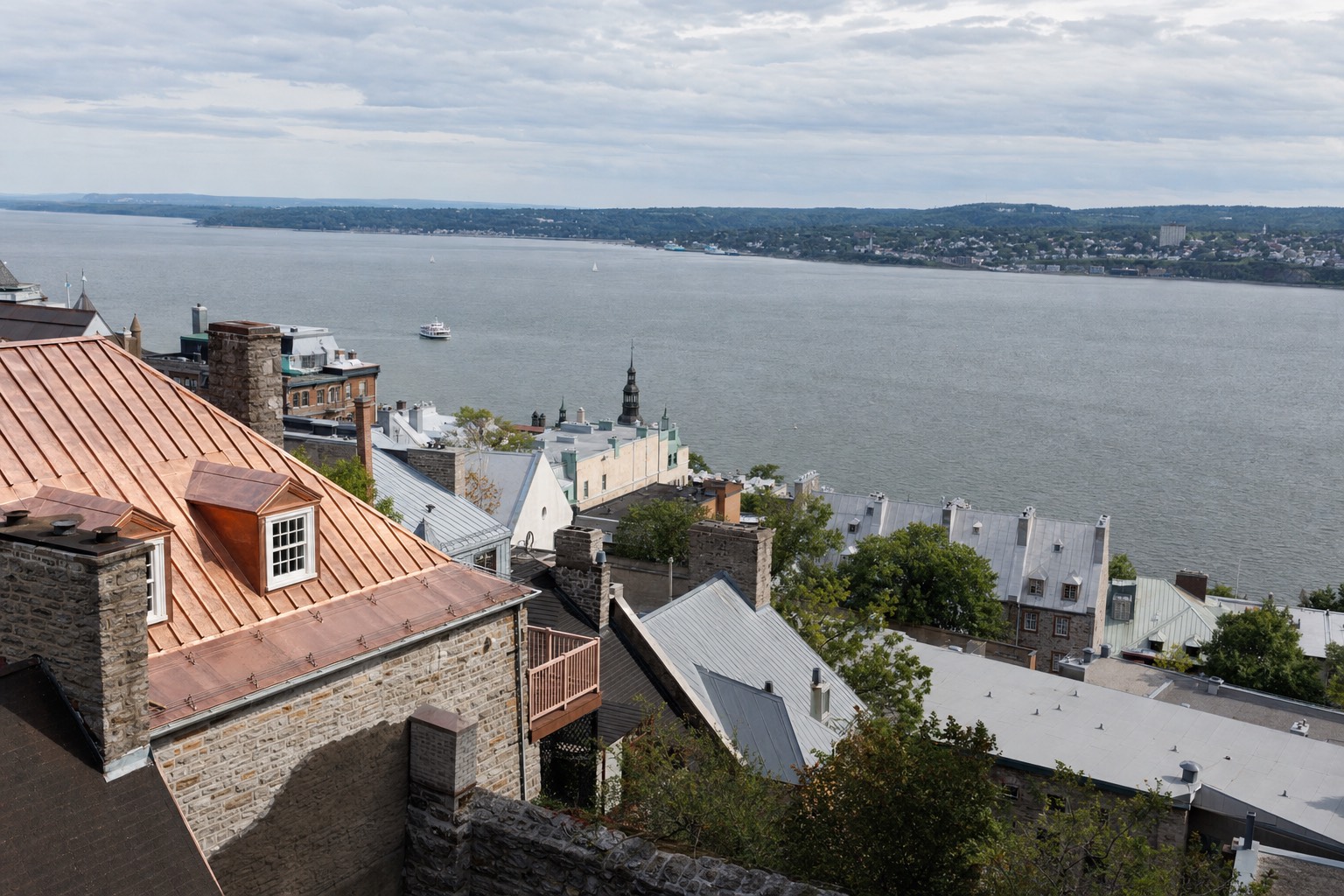
Quick answer
They are different trips: Montreal is the big-city culture and food stop, Quebec City is the concentrated walled old town. With four days or fewer, pick the one that matches your trip. With five or more, do both; about 250 km and a three-hour ride separate them.
The question reaches me on Dufferin Terrace at least once a week, usually from someone holding a phone with two pins dropped on a map of the St. Lawrence. Five days, they say. How many for Montreal, how many for here? I guide in Quebec City, so you might expect a homer's answer. What I actually give them is a warning: you are not choosing between two versions of the same place. You are choosing between two different trips that happen to share a river and a language.
TL;DR: Montreal is a metro area of about 4.6 million people built around neighbourhoods, restaurants and nightlife. Quebec City is a fifth of that size, and its walled old town packs more 17th-century streetscape into a walkable core than anywhere else north of Mexico. Under five days, pick one. With five or more, do both; roughly 250 km of flat highway and a rail corridor connect them.
Should You Spend More Time In Montreal Or Quebec City?
Spend more time in whichever matches the trip you want: Montreal for big-city food, nightlife and neighbourhood-hopping, Quebec City for concentrated old-world streets you can cover on foot in a weekend. On a trip of five days or more, the honest answer is both, since only about 250 km separates them.
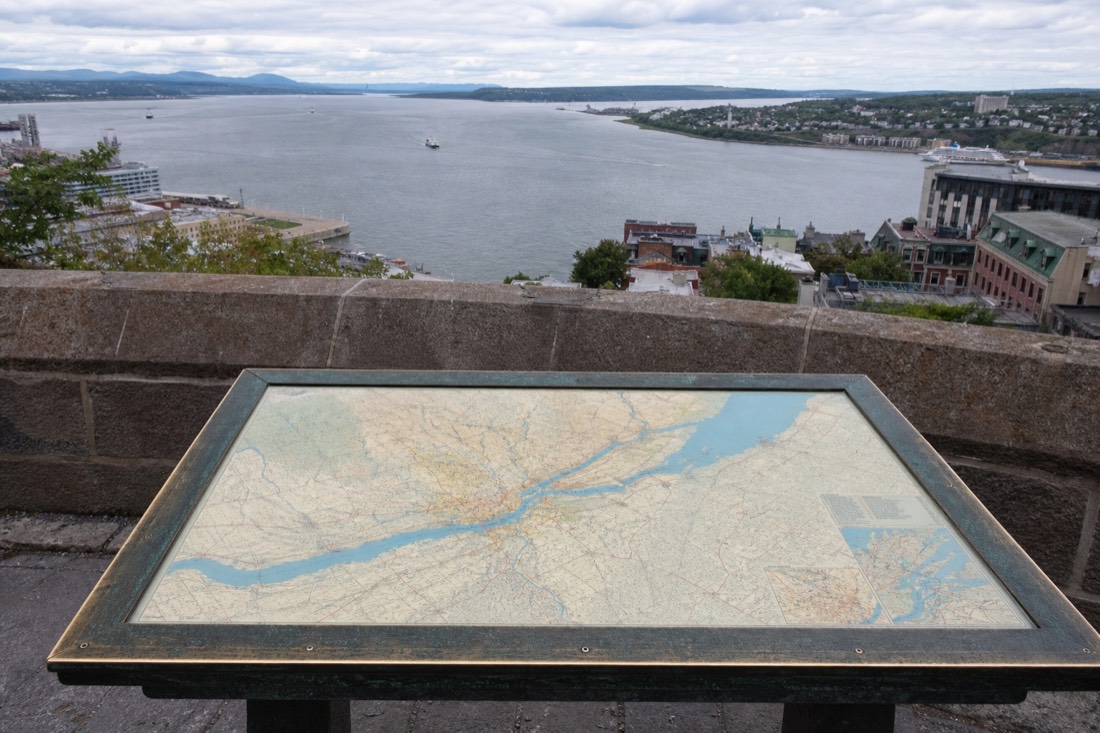
Here is the test I give visitors. Think about your favourite travel day ever. If it involved discovering a restaurant at 11 pm, wandering between distinct neighbourhoods, or catching live music, Montreal will feed you for days. If it involved a fortified gate, a cobbled hill, and a café where you sat for an hour watching one street, Quebec City is your town. Neither answer is wrong. The mistake I see is people giving each city the wrong kind of time: racing through Montreal's neighbourhoods in a day, then finding themselves with four days inside walls they crossed by lunchtime.
The two cities also reward different paces. Montreal spreads out, so its best days are planned loosely around zones. Quebec City concentrates, so its best days are unhurried; guests on my walks who slow down here find layers, the ones who sprint see a postcard. If you only have time for one and it is your first visit to the province, I nudge most couples toward Quebec City and most groups of friends toward Montreal. Families split down the middle, and anyone anxious about the language question should read whether Americans are welcome in Quebec City before letting that decide anything. Short version: you will be fine in both.
How Different Are Montreal And Quebec City, Really?
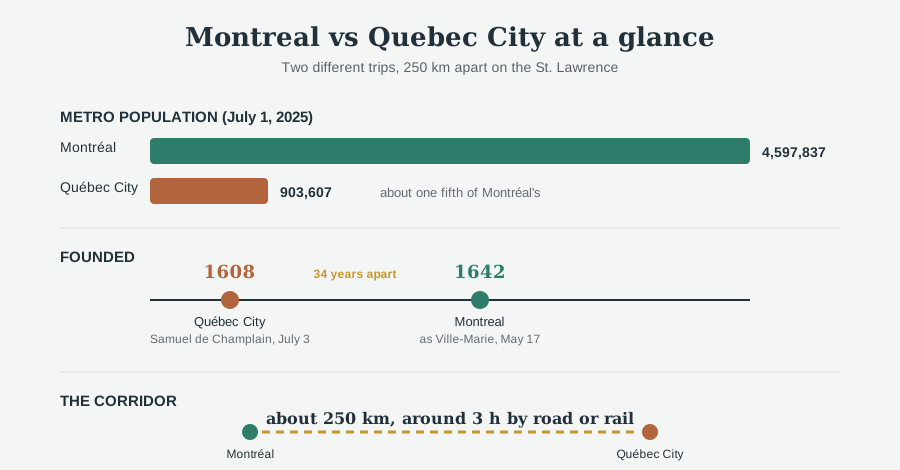
Very. Montréal's metro area counted 4,597,837 people on July 1, 2025; Québec City's counted 903,607, roughly a fifth of that. Montreal, founded in 1642 as the mission town of Ville-Marie, grew into a sprawling modern city. Quebec City, founded in 1608, kept its walls and its old-world scale.
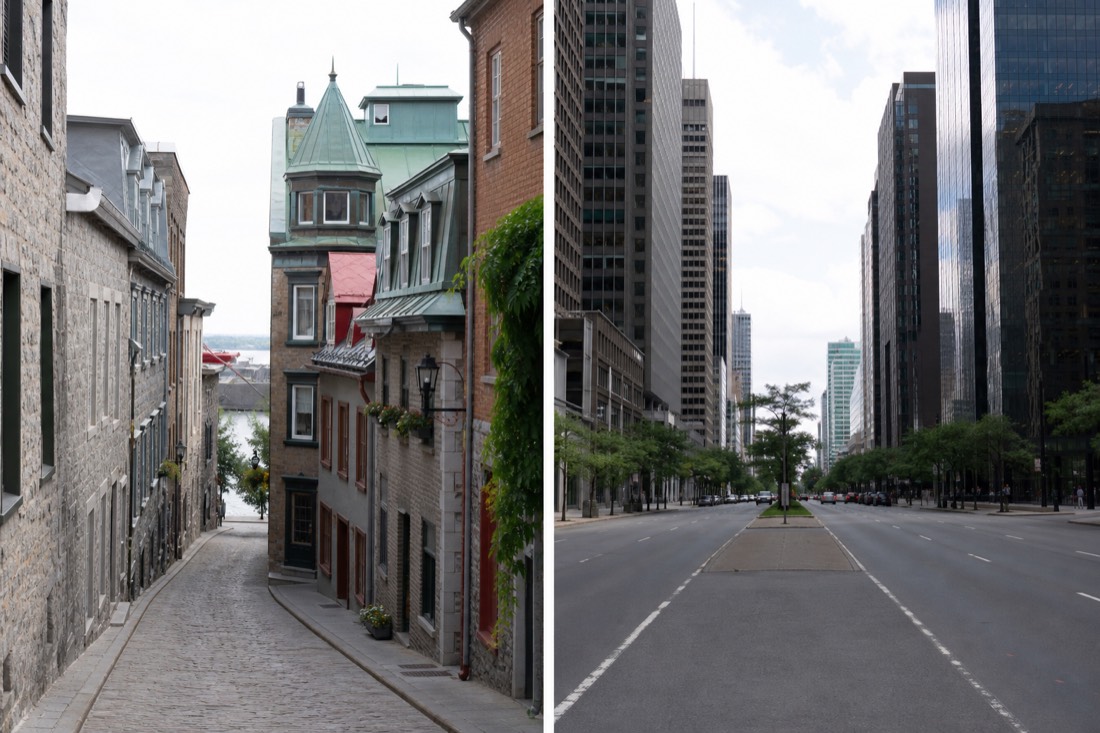
The founding dates explain more than they seem to. Samuel de Champlain planted Quebec City on July 3, 1608, as the anchor of New France, and the city's own history still shapes its layout: the walls survived, the Upper and Lower Towns survived, and the historic district earned UNESCO status because so little was flattened. Montreal came 34 years later and then outgrew its origins many times over. Old Montreal is a lovely district inside a big downtown; Old Quebec is the downtown, at least as far as a visitor's day is concerned. That is why I tell people Quebec City is the only place in Canada where you can walk out of your hotel and be inside the sight you came for. My city is the museum piece. Montreal is the living metropolis with a museum quarter.
| Montréal | Québec City | |
|---|---|---|
| Metro population (July 1, 2025) | 4,597,837 | 903,607 |
| Founded | May 17, 1642, as Ville-Marie | July 3, 1608, by Samuel de Champlain |
| Historic core | Old Montreal, one district among many | Walled Old Quebec, the heart of the visit |
| Feels like | A big North American city with a French accent | A small European capital that stayed put |
| Strongest suit | Food scene, nightlife, festivals, neighbourhoods | Walkable history, river views, easy day trips |
| Ideal first visit | 2 to 3 days | 2 days, 3 with a day trip |
The population gap is not trivia; it is the trip. Statistics Canada's metro-area figures put Montreal at five times our size, and you feel every multiple of that in restaurant choice, late-night options and how far apart things sit. What Quebec City does with its smaller footprint is compress. The Frontenac, Place Royale, Petit Champlain and the ramparts stand within a few hundred metres of each other, which is why our walking tours cover in two hours what a Montreal equivalent spreads across a bus route. We are, after all, the only walled city north of Mexico, and the walls keep everything close.
How Many Days Does Each City Deserve?
Give Quebec City two full days and Montreal two to three. Old Quebec is dense enough that 48 hours covers the walled core, a Montmorency Falls run and a proper long dinner. Montreal spreads its best neighbourhoods across a much larger map, so it absorbs a third day more gracefully.
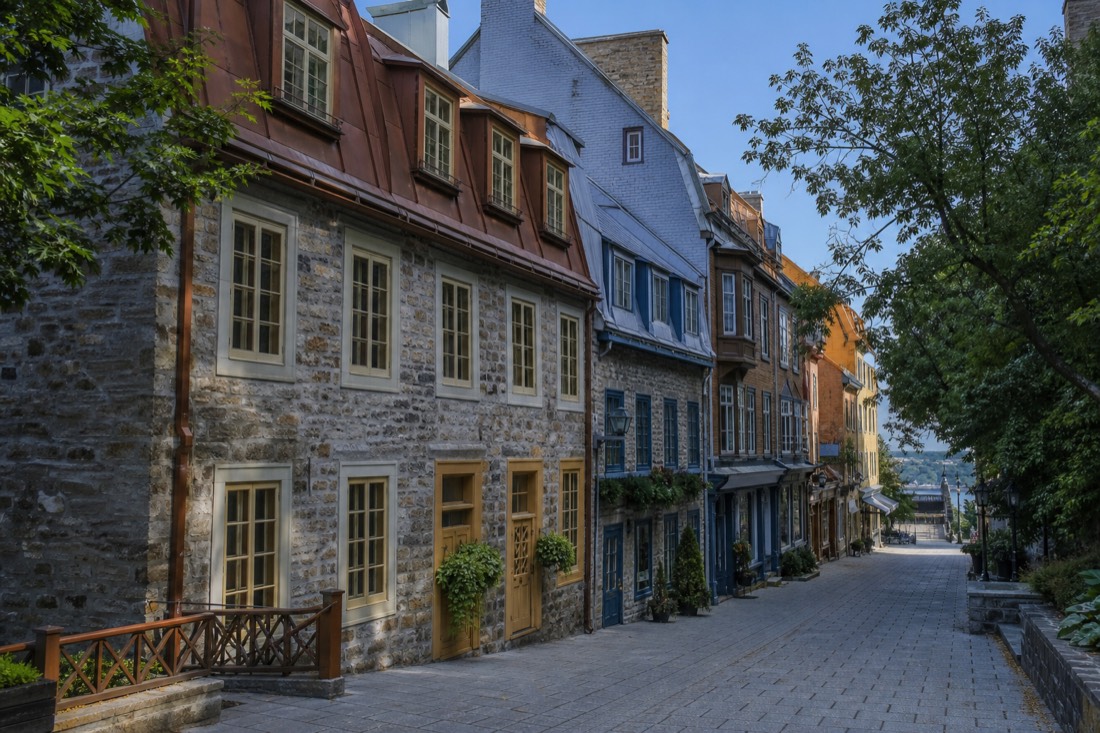
Trip length changes the answer more than personal taste does, so here is the split I give visitors when they ask me to just decide for them:
| Trip length | Montréal | Québec City | The move |
|---|---|---|---|
| 2 days | 2 or 0 | 0 or 2 | One city only; the transfer would eat half a day |
| 3 days | 3 | Guided day trip | Base in Montreal, visit Quebec City by full-day coach |
| 4 days | 2 | 2 | Workable but brisk; travel between cities in the morning |
| 5 days | 3 | 2 | The comfortable first-timer split |
| 7 days | 3 | 3, plus a day trip | Add Montmorency Falls or Île d'Orléans from Quebec City |
Two things hide inside that table. First, the transfer day: moving between cities costs you a morning at minimum, which is why I never recommend splitting a four-day trip into anything more complicated than two and two. Second, Quebec City's number assumes you use its density. Day one is the walled town, on foot. Day two is the surroundings, the falls or the island, and my Quebec City itinerary lays out both days hour by hour, including where the cruise crowds surge and how to duck them. Montreal's third day earns its place differently, through neighbourhoods, markets and meals rather than sights you can name in advance.
Winter bends the math toward us, I will admit. Carnival season and the snow on the ramparts add a reason for a third Quebec City day that summer does not quite match.
Can You Visit Both Montreal And Quebec City In One Trip?
Yes, easily. About 250 km of flat highway and a frequent rail corridor connect them, so the classic route is flying into Montreal, spending two or three days there, then moving to Quebec City. Short on time? A guided full-day coach turns Quebec City into a Montreal day trip.
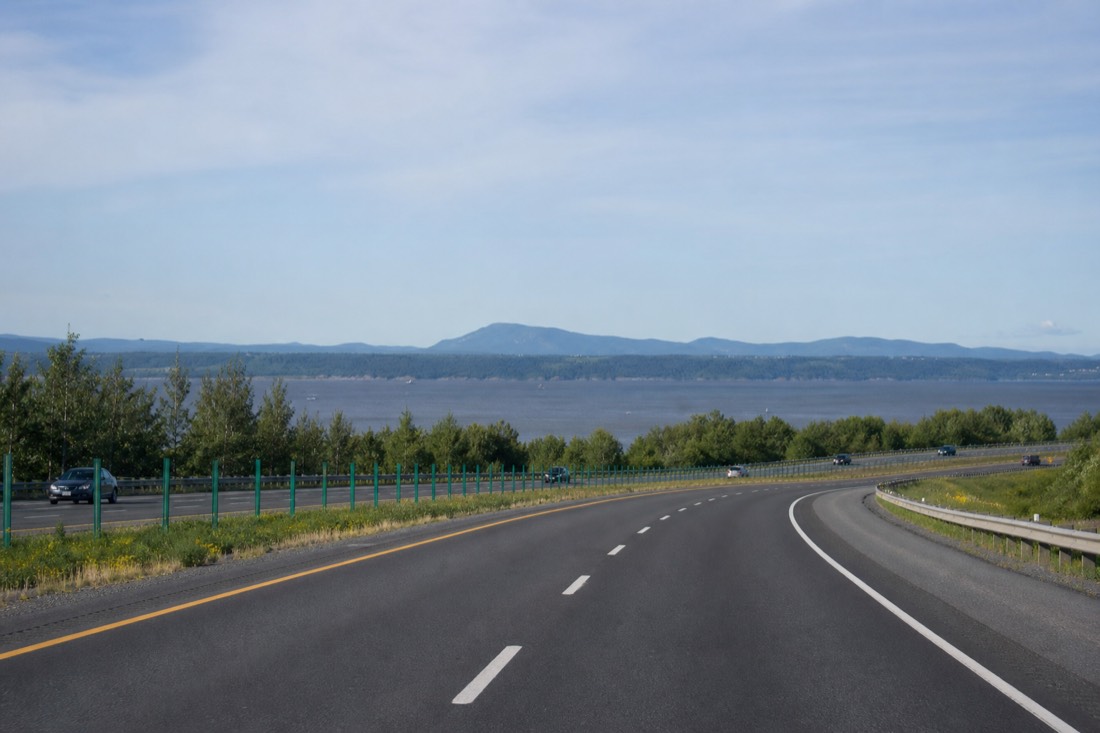
The corridor is the easiest intercity hop in eastern Canada. Quebec City's tourism office puts the distance at about 250 km, and the ride runs around three hours whether you drive or take the train; I compare every option, with real fares and timings, in the Montreal to Quebec City day trip guide, and the schedules, fares and seat advice for the rail version sit in the VIA Rail train guide. For travelers basing themselves in Montreal on a three-day trip, the guided coach is the version I recommend most, because it solves the problem the train cannot: it folds Montmorency Falls into the route, and it hands you Old Quebec free time with zero logistics. It fills the same role as the city's own bus tours, motorized coverage of ground your feet cannot reach, and travelers who want a summer date locked in should check live availability & prices on GetYourGuide before Saturday departures sell through. Concord Tours runs it at 4.7 across 1,679 reviews, from $81.
One caution from someone who watches the day-trippers arrive: the coach version of Quebec City is real but abbreviated. You will see the postcard core and the falls. You will not get the 10 pm walk on the empty terrace, which is the moment this city plays its best card. If the day trip hooks you, come back with a night to spend.
Which City Wins On What You Actually Came For?
Quebec City takes old streets, river views and walkability without much of a contest, since its whole visitable core sits inside a walled few hundred metres. Montreal takes food range, nightlife and neighbourhood variety on scale alone: five times the metro population buys five times the choice.
Most head-to-head pieces score these cities as if they were competing at the same event. They are not. So instead of a verdict, here is the scorecard by category, with the margin marked, because a narrow win and a blowout should not read the same on the page.
The blowouts run in both directions and they are the ones worth planning around. Nothing in Montreal answers a fortified gate and a 1608 street plan, and nothing in Quebec City answers a metro area of 4,597,837 people deciding where to eat on a Tuesday. The close categories, museums, river access, family days out, are where personal taste actually decides, and where I would stop reading comparisons and look at your own week.
| What you came for | Winner | Margin | The honest caveat |
|---|---|---|---|
| 17th-century streets you can walk | Québec City | Wide | Old Montreal is genuinely lovely, just smaller in its role |
| Restaurant range across a whole week | Montréal | Wide | Quebec City punches above 903,607 people, but range is range |
| Doing the trip entirely on foot | Québec City | Wide | The old town is the sight, not a district within a bigger city |
| Nightlife and live music | Montréal | Wide | Quebec City goes quiet earlier, which some people came for |
| River views | Québec City | Clear | The cliff and the terrace do the work |
| Festivals and events | Montréal | Narrow | Winter Carnival narrows this considerably in February |
| Day trips from your base | Québec City | Narrow | Montmorency Falls and Île d'Orléans sit close to the walls |
| Trips with teenagers | Even | n/a | Depends entirely on the teenager |
Montreal Or Quebec City: Which Fits How You Travel?
Couples and slow travellers lean Quebec City. Groups of friends, and anyone who builds a trip around restaurants, lean Montreal. Families genuinely split. First-timers to the province usually get more out of the walled town, because it delivers its best material in two days rather than five.
I said earlier that I nudge most couples one way and most groups of friends the other, so here is that instinct laid out properly, along with what I would do if you are splitting the days anyway. Travel style predicts satisfaction here better than any list of attractions does, because both cities are good and only one of them will match the rhythm you actually enjoy.
The pattern behind the table is simple enough to state. Quebec City rewards people who sit down; Montreal rewards people who keep moving. If your idea of a great afternoon is one café, one street and two hours, the smaller city will feel generous and the bigger one will feel like homework. Invert that and the verdict inverts with it.
| Traveller | Leans | Why | If you are splitting days |
|---|---|---|---|
| Couple, first trip to Quebec | Québec City | The evening walk is the memory people keep | Give us the nights, Montreal the days |
| Group of friends | Montréal | Choice, late hours, room to disperse and regroup | Montreal base, Quebec City as the coach day trip |
| Family with young children | Even | Funicular and cannon here, space and variety there | Quebec City first, while patience lasts |
| Solo traveller | Québec City | Small enough to feel comfortable alone at night | Two nights here, the rest in Montreal |
| Food-led trip | Montréal | Range across a whole week rather than a weekend | Reverse the usual split: 3 and 2 |
| History-led trip | Québec City | Founded 1608, walls intact, UNESCO core | The 1642 story is a district, not a city, in Montreal |
| Second visit to the province | Either | You already know which pace you liked | Whichever you rushed last time |
Is Quebec City Better Than Montreal In Winter?
Quebec City, for most visitors, and this is the one season where I will not hedge. A walled town under snow is a different order of thing from a big city under snow, the festive streets stay lit from the end of November to mid-February, and Carnival gives the winter here a centre of gravity.
Summer is when the comparison is closest and winter is when it separates. Snow does something specific to this city that it cannot do to a larger one: it removes the parts of the year that make Old Quebec look like a set, the cruise crowds and the terrace queues, and leaves the stone, the ramparts and the copper roofs to themselves. Montreal in January is a big city being cold. Quebec City in January is the thing you saw in the photograph.
That is a judgment, not a measurement, and the counter-argument is real. Cold here is genuinely cold, the cliff routes ice over, and a big city gives you far more places to go indoors when the wind turns. If your winter tolerance is low, the larger city is the safer booking.
| Window | Québec City | Montréal | Who should go where |
|---|---|---|---|
| End of Nov to Dec | Festive lights up across Lower Town, markets, early dark | Big-city Christmas, more indoors to retreat into | Lights chasers come here |
| January | Quietest and coldest, streets close to empty | Scale keeps the options open in bad weather | Photographers here, comfort seekers there |
| February | Carnival, snow on the ramparts, the season's peak | A normal winter month | Come here, book early |
| Mid-Feb to March | Decorations down, emptiest walking of the year | Bigger cultural calendar carries it | Crowd-avoiders here |
| April | Patchy, unglamorous, cheap | Spring arrives with more to do indoors | Montreal, honestly |
What Do Guided Experiences Cost In Quebec City?
Less than most first-timers budget. The city's flagship walking tour starts at $41 USD, the sightseeing river cruise at $46, and the full-day coach from Montreal at $81 with a Montmorency Falls stop included. Even the splurge option, a food tour with more than ten tastings, runs $125 USD.
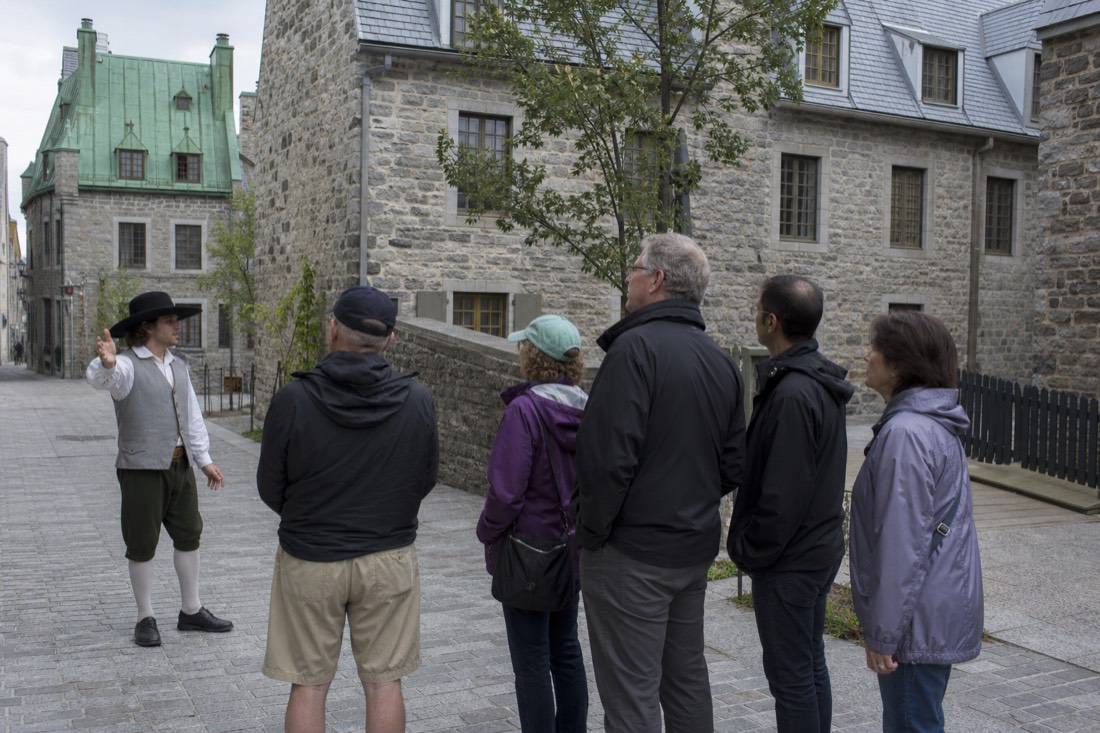
Cost rarely decides the Montreal-or-Quebec question, and it should not: the corridor keeps the transfer cheap either way. What the pricing does show is how far a modest budget stretches on the Quebec City side, because the town's compactness keeps tour lengths short and prices with them. These are the current from-prices on the experiences my guests book most:
| Experience | Rating | Reviews | From |
|---|---|---|---|
| Old Quebec Classique walking tour with funicular | 4.9 | 1,538 | $41 USD |
| Guided sightseeing river cruise | 4.4 | 3,211 | $46 |
| Half-day Montmorency Falls and Ste-Anne-de-Beaupré | 4.2 | 2,909 | $73 USD |
| From Montreal: Quebec City and Montmorency, full day | 4.7 | 1,679 | $81 |
| Old Quebec food tour, 10+ tastings | 4.9 | 1,607 | $125 USD |
So, which city deserves more of your trip? The one whose best day sounds like your best day. Montreal for appetite and nightfall, Quebec City for stone and stillness, and both if your calendar allows five days. The river has been connecting these two since Champlain's time. Let it connect your trip too.
Your Next Step
Choose Your Quebec Experience
General recommendation, before you add preferences. Confirm dates and participation requirements with the operator.
Have your travel date in mind? Connect Place Royale, Petit Champlain and the upper town with a licensed guide and an included funicular ride. Check the departure before arranging the rest of your day.
2 hours; meet at 112 Rue Saint-Paul and finish near City Hall. Hotel pickup is excluded.
Departure schedule from Viator; final availability and price are confirmed on Viator.
Compare Options And Fit Your Plans
Connect Place Royale, Petit Champlain and the upper town with a licensed guide and an included funicular ride. 2 hours; meet at 112 Rue Saint-Paul and finish near City Hall. Hotel pickup is excluded.
Combine round-trip Montreal transport, an Old Quebec guided walk and Montmorency Falls in one day. 13 hours, returning to Montreal. It is not a one-way train or transfer; cable-car operation depends on availability.
Taste poutine, pea soup and maple treats across a guided Old Quebec food walk. 3 hours, English guide. Menus can change; dietary substitutions require advance confirmation.
Explore the snowy forest with a guide, snowshoe equipment, round-trip transport and lunch included. 6 hours overall, including the journey. This is an active winter excursion; check the conditions and participation requirements.
Affiliate links: we may earn a commission at no extra cost to you.